India’s Strategic Minds on the Future of Global Geopolitics
Global Geopolitics
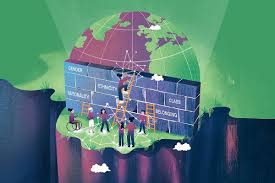
In a world shaped by trade tensions, AI rivalries, and supply-chain shifts, Indian business leaders are actively discussing geopolitics on LinkedIn, turning global risks into strategic opportunities for India Inc.
Subhrakant Panda, Managing Director of IMFA, recently spoke on NDTV Profit about the current geopolitical situation’s impact. He noted that while prolonged conflicts pose challenges, India’s economy shows strong resilience and can overcome short-term hurdles. Panda linked this to smart corporate moves, like capacity expansions and raw material security, to safeguard margins amid uncertainty.
Shiva Acharya highlights how global headwinds in FY26–FY27 are being converted into advantages through more joint ventures, manufacturing inflows, and infrastructure focus — positioning India to lead the next supply-chain reset.
Sagar Chanana outlines India’s geopolitical edge from 2026–2030, driven by supply-chain diversification, strategic autonomy, and acceleration while others slow down.
Ram Charan, the renowned management expert, urges CEOs to embed geopolitics into core strategy, warning that old predictable models are obsolete amid shifting alliances and volatility.
Arpit Chaturvedi (via Teneo Vision 2026) points out that nearly half of global CEOs now see India as extremely important for the next decade — often surpassing China — due to resilience and geoeconomic appeal.
These discussions reflect a broader sentiment: Geopolitics is no longer just external risk — it’s a core business driver. From Davos to domestic summits, leaders emphasize agility, diversification, and proactive planning to turn uncertainty into India’s competitive strength.
As 2026 progresses, LinkedIn continues as a key platform for these real-time insights, helping professionals in Mumbai and beyond stay ahead in a fragmented world.
Comments
No comments yet. Be the first to comment!